
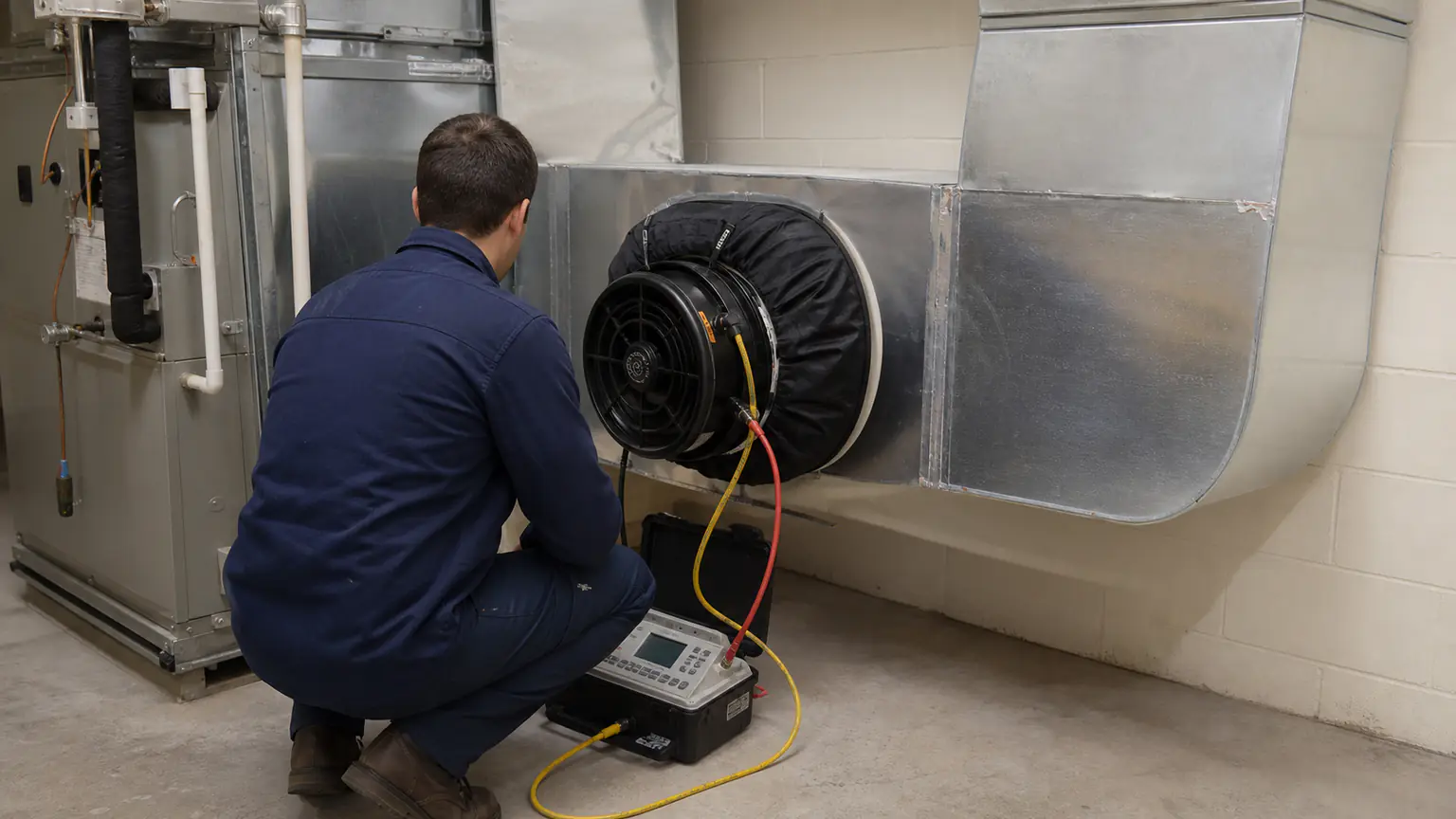
Energy use is shaped by the building, equipment, controls, weather, and how the property is operated. These ten review points can help an owner or manager organize the next maintenance or assessment conversation.
1. Treating every comfort complaint as an equipment problem
Map the unit, floor, orientation, time, and operating condition before replacing equipment.
2. Ignoring filter and airflow basics
Qualified staff should keep filters, supply paths, returns, coils, and outdoor equipment access in the maintenance plan.
3. Leaving controls undocumented
Record thermostat schedules, central controls, overrides, and seasonal changes so the team knows what the system is being asked to do.
4. Looking at insulation without air movement
Insulation and air sealing address different parts of the envelope. Review both, along with ventilation and moisture.
5. Skipping duct and distribution checks
Disconnected, damaged, uninsulated, or poorly balanced distribution can create comfort problems even when the equipment is operating.
6. Using one utility bill as a diagnosis
Compare similar weather periods and note occupancy, rates, equipment, and project changes. A bill can show a pattern, not the cause.
7. Deferring small water or moisture problems
Roof, plumbing, drainage, and condensation concerns can damage materials and change the safe project scope.
8. Buying a product before defining the assembly
Material choice should follow the building conditions, access, safety requirements, and approved scope.
9. Assuming a nearby incentive applies
Utility service, account type, building fit, approved measures, funding, and final review determine eligibility.
10. Starting without a closeout plan
Define the photos, readings, invoices, approvals, warranties, and records the property should receive when the work is complete.