
Multifamily building performance
Multifamily LED Lighting
- Property first
- Human review
- Clear next step
LED lighting upgrades are often the first thing we look at in a multifamily building, because common-area lighting is normally on the owner's meter and it runs constantly. Corridors, stairwells, garages, and exterior fixtures stay lit whether the building is full or half empty. The wattage of the old fixture and the wattage of the new one are both printed on the equipment or its spec sheet, so the change in draw is arithmetic rather than an estimate. What the project is worth at your address depends on the fixture count, the hours those fixtures run, and the incentive rules in effect when the application is filed, which is what a property-specific review is for.
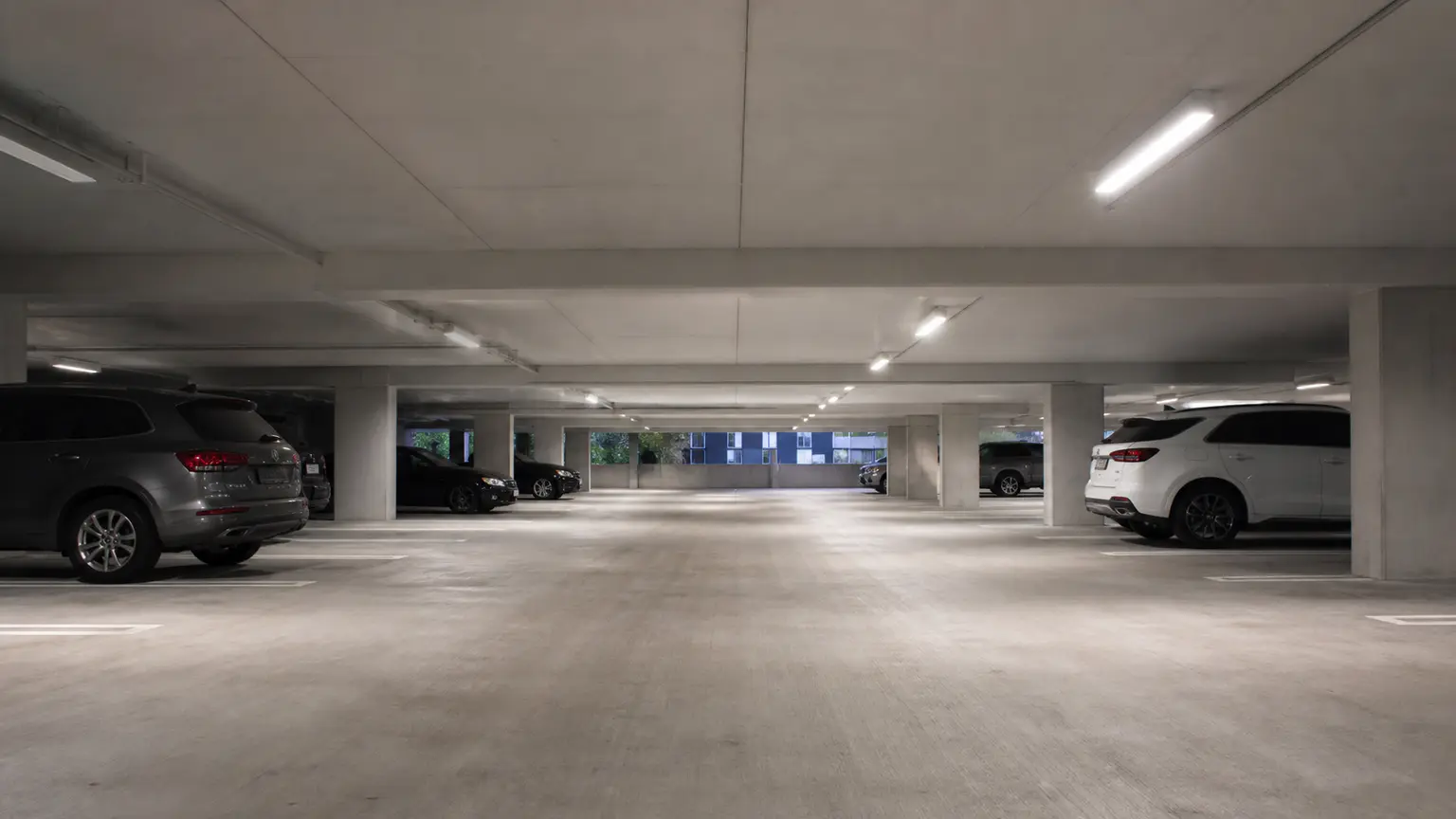
Where LED lighting upgrades pay off in a multifamily building
Most energy work in an occupied building runs into the split incentive problem. The owner pays for the insulation, and the tenant who pays the heat bill sees the benefit. Common-area lighting is the exception. Corridor, stairwell, garage, laundry, and exterior fixtures are almost always on the house meter, so a reduction in draw lands on the bill the owner actually pays.
The second reason it comes first is run time. A corridor fixture is typically energized every hour of the year, and a wall pack sits on a photocell. Those are also the fixtures that drive relamping trips, because a burned-out lamp in a corridor or a stairwell gets reported rather than tolerated.
- Corridors and interior hallways, typically the highest run-time fixtures in the building
- Stairwells and egress paths, where code sets a minimum light level, so those fixtures cannot simply be switched off
- Parking garages and covered parking, often HID fixtures energized around the clock
- Exterior wall packs, canopies, and pole lights on photocells or time clocks
- Lobbies, mail rooms, laundry, fitness, and community rooms
- Basements, mechanical rooms, storage, and service corridors that get relamped rarely
- Exit signs and emergency egress fixtures, which run continuously and are usually on unswitched or emergency circuits
What we count before anyone quotes a fixture
The assessment starts as an inventory, not a proposal. An analyst walks the common areas in scope and records fixture type and housing, lamp type and count per fixture, ballast or driver type, mounting height, controls, and available operating-hour information. Mounting height matters because a fixture high in an atrium changes the equipment choice, labor, and access equipment required.
Where light levels need review, readings may be taken in garages, stairs, egress paths, or other areas in scope. Lighting verification uses fixture and light-level records, not blower-door testing, which may be used for envelope diagnostics when appropriate.
What actually gets installed
There are three ways to convert an existing fixture and they are not interchangeable. Which one fits depends on the condition of the housing, not on preference.
Controls are usually the second half of the project, and they are the part most lighting quotes leave out.
- Lamp-only retrofit: an LED tube in the existing housing. Fastest and least disruptive. The ballast either stays in the circuit as a remaining failure point, or it comes out and the fixture is rewired and relabeled so the next electrician knows what is inside it.
- Retrofit kit: new internal gear, optics, and driver installed inside a housing that is still sound.
- Full fixture replacement: the right call when the housing is corroded, water damaged, or throwing light in the wrong distribution for the space. Costs the most and resets the whole fixture.
- Controls: occupancy and vacancy sensors in laundry rooms, storage, and service corridors
- Controls: bi-level fixtures in stairwells and garages that step down to a lower output instead of going dark, so the egress path keeps light on it
- Controls: photocells or an astronomic time clock on exterior fixtures so nothing burns at noon
- Products: chosen from the qualified products list the program requires on the day of install, with color temperature selected per space rather than one number for the whole building
- Disposal: old fluorescent lamps handled as universal waste under Illinois rules, and ballasts manufactured before 1979 treated as PCB containing unless they are labeled otherwise
What tenants experience, and what you have to arrange
This is one of the few upgrades that usually needs no entry into an occupied apartment. The scope is common areas, so the work happens in corridors, stairwells, garages, and outside. Crews typically take a floor or a wing at a time during business hours, run temporary work lighting when a circuit is off, and bring the area back up before they leave it. Duration tracks fixture count and mounting height rather than unit count, so a garage that needs a lift can take longer than three floors of corridor. If in-unit fixtures are in scope, that changes, and access notices go out through your management office.
What we need from you is short but real.
- Access to electrical rooms, and panel schedules if they exist
- A contact who can approve de-energizing circuits, and a window to do it
- Staging or parking for a lift where fixtures are high
- The ability to close one garage aisle or bay at a time
- Utility account information and a signed program application, because the program contracts with the account holder, not with us
- Resident notices posted through your office if any in-unit fixtures are included
How this works with the ComEd paperwork
Lighting is an electric measure, so it generally runs through the ComEd Energy Efficiency Program rather than the gas-side weatherization programs that fund insulation and air sealing. Building Energy Experts is authorized for the ComEd, Nicor Gas, Peoples Gas, and North Shore Gas programs. Naming those programs identifies who we work with. It is not an endorsement, and it does not decide whether a specific property qualifies.
Sequencing matters more here than anything else on this page. Multifamily and commercial lighting incentives are usually prescriptive, paid per piece of qualifying equipment, and they usually require pre-approval before the equipment goes in. A building that installs first and applies afterward can lose the incentive entirely, no matter how good the project was. Equipment normally has to sit on the program's qualified products list on the day it is installed, not the day it was quoted. The paperwork. We file it, from pre-approval through final submission. What a program pays depends on the program and the address.
What you receive when the job closes
You get a fixture schedule. It is the record of what is actually in the building, and older buildings often do not have one on file. It lists every common-area fixture location, what was there, its wattage and lamp type, what replaced it, and what control was added. Keep it. It is the reference for future relamping, for capital planning, and for the next contractor who asks what is in the garage.
- Spec sheets and qualified-products listings for every product installed
- Manufacturer warranty documentation for fixtures, lamps, drivers, and controls
- Light-level readings before and after for any space we metered
- Disposal records for the old lamps and ballasts
- A copy of the complete utility program file, pre-approval through final submission
When lighting is the wrong place to spend
Lighting is not always the right place to spend, and we say so on the walkthrough when it is not. If the corridors were converted within the last several years, a second retrofit usually has little left to capture, and the money is better spent on controls or on the envelope. If the complaint that started the conversation is cold units, drafts, or a high gas bill, lighting will not touch it, because heat leaves through the envelope and the heating plant, not the corridor fixtures.
If fixtures keep failing because of water coming through a garage deck or because the housings are corroded, a lamp swap hides a fixture problem that will come back. If the panel is at capacity, wiring is damaged, or the emergency circuit does not test correctly, electrical repair comes first. Finding that out is the point of the walkthrough. The assessment covers lighting alongside the envelope and the mechanical systems, and the report says which one to fund first. For qualifying properties that assessment is available at no cost.
Common questions
Do you need to get into my tenants' apartments?
Usually not. A common-area LED lighting scope covers corridors, stairwells, garages, laundry and mail rooms, mechanical spaces, and exterior fixtures, none of which require unit entry. If in-unit fixtures are added to the scope, that changes, and we schedule access notices through your management office rather than knocking on doors.
Can we install the fixtures now and file for the incentive later?
That order is backwards, and it is the one thing on a lighting project that can cost you the incentive outright. Multifamily and commercial lighting incentives are typically prescriptive and typically require pre-approval before the equipment is installed, and the equipment normally has to appear on the program's qualified products list on the day it goes in. We file the pre-approval first, then install, then submit the final documentation.
Will an LED retrofit lower my bill or my tenants' bills?
It depends on which meter the fixture is on. Common-area lighting is almost always on the house meter, so a change in draw lands on the owner's bill. Fixtures inside a unit are on the tenant's meter. That is why a common-area scope goes first: it is the part of the building where the owner is the one paying for the energy. What the change is worth at your address depends on the fixture count and the hours those fixtures run, which is what the walkthrough records.
Our garage lights keep burning out. Is that a lamp problem or a fixture problem?
Both are common, and the walkthrough is what separates them. Repeated failures in a garage often trace back to water coming through the deck, corroded housings, or a failing ballast rather than the lamps themselves. If the housing is the problem, dropping new lamps into it just resets the clock on the same failure, and a retrofit kit or a full fixture replacement is the honest answer.
What happens to the old fluorescent tubes and ballasts?
Fluorescent lamps contain mercury and are handled as universal waste under Illinois rules rather than going in the building dumpster. Ballasts manufactured before 1979 are treated as PCB containing unless they carry a label saying otherwise, and those are removed and handled separately. You get the disposal records in the closeout package.
Is LED lighting funded the same way as weatherization?
No, it is a different path. Insulation, air sealing, and duct sealing run through the gas-side weatherization programs, where certain income-eligible buildings may qualify for coverage at no cost. Lighting is an electric measure and is normally incentivized per piece of qualifying equipment instead of as a whole-building package. Which programs apply to your property depends on the program and the address, and it takes a property-specific review to answer.
Next step
See what may apply to your building
A property-specific review is the only way to know which programs fit your address.