
Who we serve
Energy Upgrades for Small Multifamily Buildings of 3 to 9 Units
- Property first
- Human review
- Clear next step
Three flats, six flats, and small walkups. Three units is our minimum and we will tell you if you are under it. On a building this size we can usually test every unit instead of sampling, so every comfort complaint gets an answer.
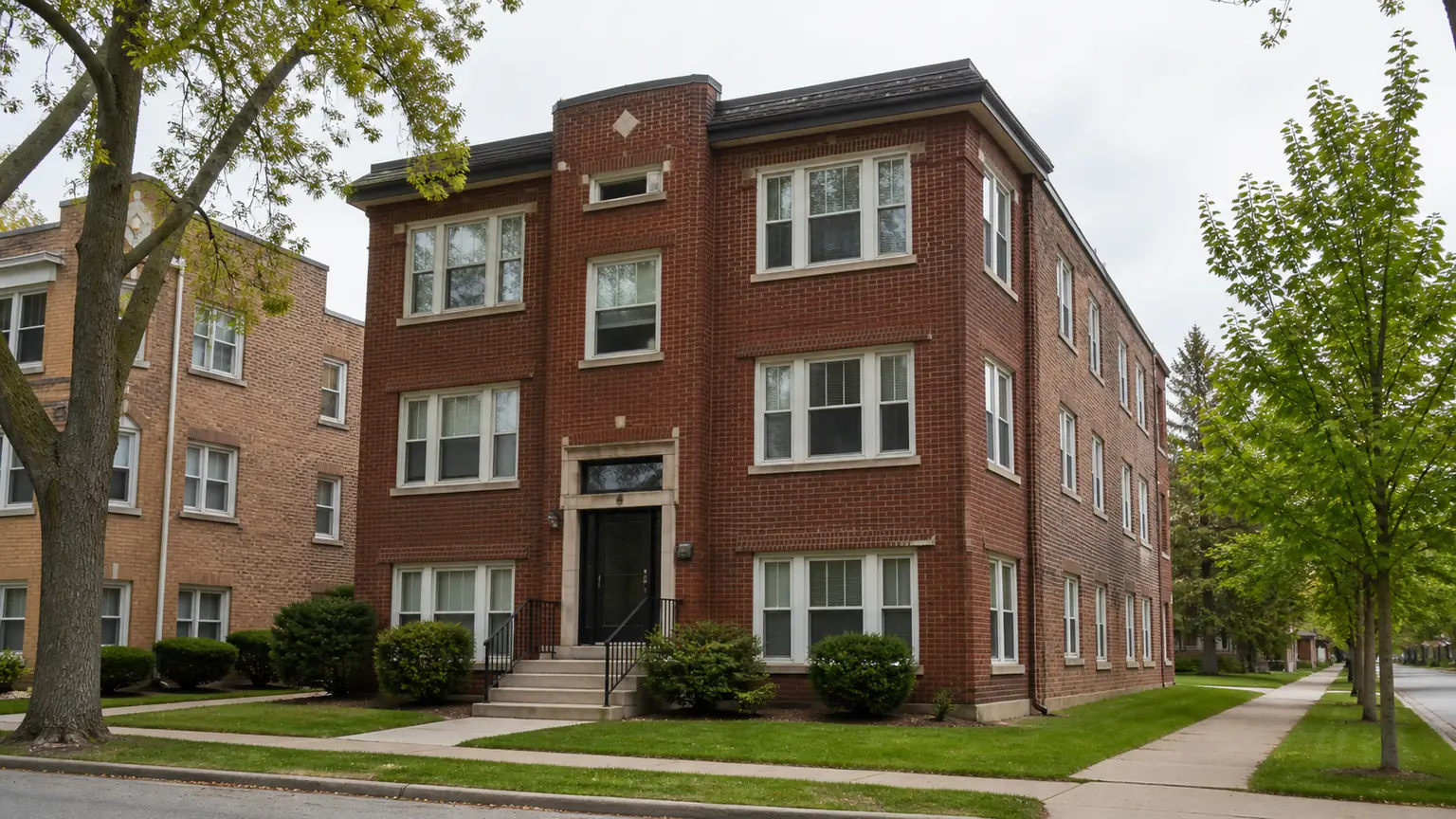
Three units is the floor, and here is why we say so
Building Energy Experts works on small multifamily property with 3 or more residential units. A three flat, a six flat, a converted two and a half story with four apartments, a small walkup with eight: all of those are in scope.
A single family house and a two flat are not, and we would rather say that on this page than after you have filled out a form. The reason is the program side. The utility efficiency programs we are authorized for treat multifamily property differently from single family housing, and multifamily is the work we are set up to deliver. If you have fewer than three units, a residential program through your own utility is usually the right door, and we will tell you that instead of taking the appointment.
Small buildings hide the same defects in fewer places
The physics do not shrink. A six flat can still have a continuous stair, stacked plumbing chases, and a top-floor ceiling connected to the attic. With fewer building types and access points than a large complex, the review can often be more direct.
Common conditions can include attic insulation over an unsealed ceiling plane, untreated rim and band joists, rear stairs or porch assemblies with comfort problems, basement mechanical rooms exposed to outside air, and aging distribution systems. The actual findings come from the property review.
On a small building, broader access may be practical. Any whole-building or unit-level blower-door testing is selected for the property and approved scope rather than promised for every assessment.
- The attic or top-floor ceiling plane, and whether it was air sealed before insulation went in
- The single stair and plumbing chase connecting the basement to the roof
- Rim and band joists and the basement-to-first-floor transition
- The rear porch, the enclosed back stair, and the floor above them
- Boiler room or furnace closets, the distribution, and whether ducts have been pressure tested
- Whole-building or unit-level diagnostic results when testing is included
In small multifamily the owner is usually the decision maker
Small multifamily is frequently owned by one person rather than a management company, and quite often that person lives in one of the units. There is no building engineer, no capital plan and no procurement department. There is a budget, a tenant who is unhappy in January, and a gas bill that arrived.
We work accordingly. The report is written for a person, not a committee. It says what is wrong, what to fix first, what that changes, and which program path the property fits, without appendices nobody asked for. And because getting a crew and equipment to a building costs roughly the same whether it has six units or sixty, the order of the work matters more on a small property. We put the largest items first rather than proposing everything at once and letting you sort it out.
What the review decides, and what we file
Building Energy Experts is authorized for the ComEd, Nicor Gas, Peoples Gas and North Shore Gas efficiency programs. Small buildings are not an afterthought in this work.
The path a specific property fits depends on the utilities serving the address, how the building is metered, whether an income-qualified path applies, and current program requirements. Some properties may qualify for envelope work at no cost. That is decided by a property-specific review of your address, not by a web page and not by a two minute phone call. The assessment tells you what applies to your building, and we prepare and file the program paperwork from pre-approval through final submission.
Next step
See what may apply to this property
A property-specific review is the only way to know which programs fit your address and your building.