
Who we serve
Energy Upgrades for Large Apartment Complexes in Northern Illinois
- Property first
- Human review
- Clear next step
Several hundred units across multiple buildings, and the same comfort complaint repeating on the same stack. Sampled assessment instead of testing everything, corridor and make-up air balance, shafts and chutes, and a scope phased against your capital plan.
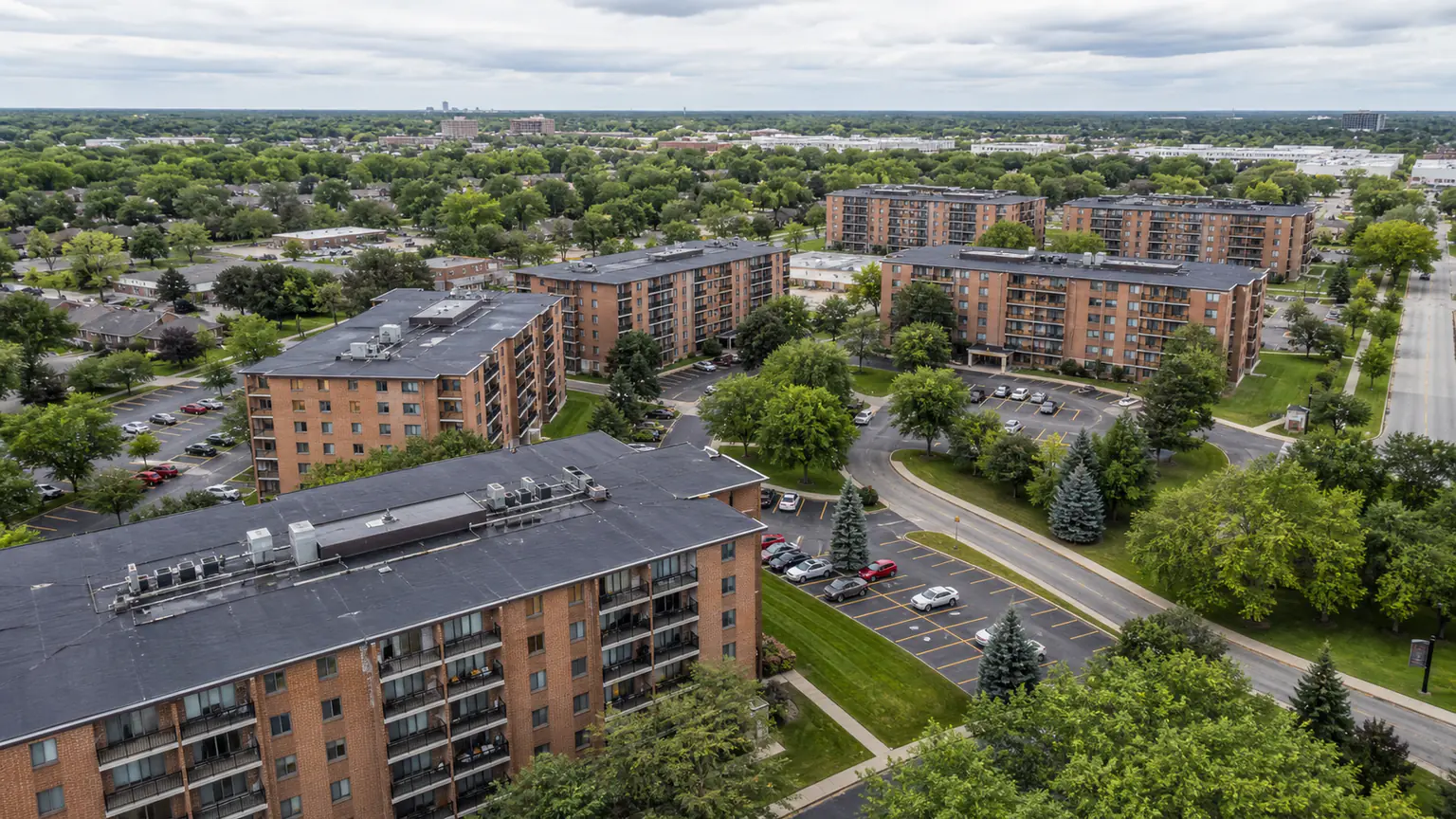
At a few hundred units, the assessment method changes
On a large apartment complex, reviewing every unit may not be practical or necessary. The assessment plan identifies the distinct building types, access available, and any representative areas needed for the approved scope.
When sampling or diagnostic testing is used, the report states which buildings or units were reviewed directly, what was tested, and where findings were applied by comparison. Blower-door testing is included only when appropriate for the property and required by the scope or program.
Mid-rise systems a walkup does not have
Once a property has interior double-loaded corridors, elevators, and central make-up air, the pressure story changes completely.
Corridors on many mid-rise buildings are pressurized on purpose so air moves from the corridor into the units. When the make-up air unit is undersized, out of balance, or has been shut off to save fuel, that intent reverses and units start pulling air from the corridor, the trash chute, the parking structure and each other. Odor moving between apartments is usually a pressure problem, not a cleaning problem, and it is diagnosable.
Elevator shafts, stair towers, trash chutes and pipe chases run the full height of the building and connect every floor to the roof, so they carry the stack effect through the whole structure. Compartmentalization matters here in a way it does not in a walkup: sealing each unit from its neighbors and from the corridor is what lets a corridor ventilation system work as designed.
- Corridor and make-up air balance, and whether the system is actually running as designed
- Elevator shafts, stair towers, trash chutes and pipe chases as full-height bypasses
- Unit compartmentalization, tested unit by unit across the sample
- Roof, parapet and top-floor ceiling assemblies
- Podium slabs and structured parking beneath occupied units
- Which meters serve which spaces, and which accounts a program application runs against
Phasing a large apartment complex against budgets and program cycles
Large properties rarely do everything at once, and utility programs run on their own annual cycles with their own pre-approval steps. We build the scope so it can be phased: a first phase that captures the biggest items across the whole site, then building groups or measure types in later phases, sequenced against the program calendar and your capital plan rather than against our schedule.
Larger owners also have procurement, and that is where projects quietly stall. We are used to vendor onboarding, certificates of insurance naming the ownership entity and the management company, W-9s, purchase order numbers, and reporting into an accounts payable system that is not on site. Naming that process at the start keeps it from becoming the reason a project slips a quarter.
Unit access at scale, and what the review decides
Access sets the schedule on a large property. Entry notice, key control and refusals become a logistics project once you are past a couple hundred doors. We work in defined blocks by building and stack, supply the notice text so it goes out from your office in your voice, and track completion by unit so you can see what is done, what was refused, and what needs a second visit. Vacant turn units are the easiest window on the property and we plan around your turn calendar where the timing allows. Common areas, mechanical rooms, roofs and parking levels carry a real share of the scope with no unit entry at all.
Building Energy Experts is authorized for the ComEd, Nicor Gas, Peoples Gas and North Shore Gas efficiency programs. Which path a specific complex fits, including whether an income-qualified path applies, depends on the utilities serving the address, how the property is metered, and current program requirements. That is a property-specific review, and the assessment answers it for your address before anything is filed.
Next step
See what may apply to this property
A property-specific review is the only way to know which programs fit your address and your building.