
Who we serve
Energy and Comfort Upgrades for Senior Living and Assisted Living Communities
- Property first
- Human review
- Clear next step
Independent living, assisted living, and memory care. Warmer setpoints and around-the-clock occupancy make a leaky envelope cost more here, and residents cannot simply be staged out while a crew works.
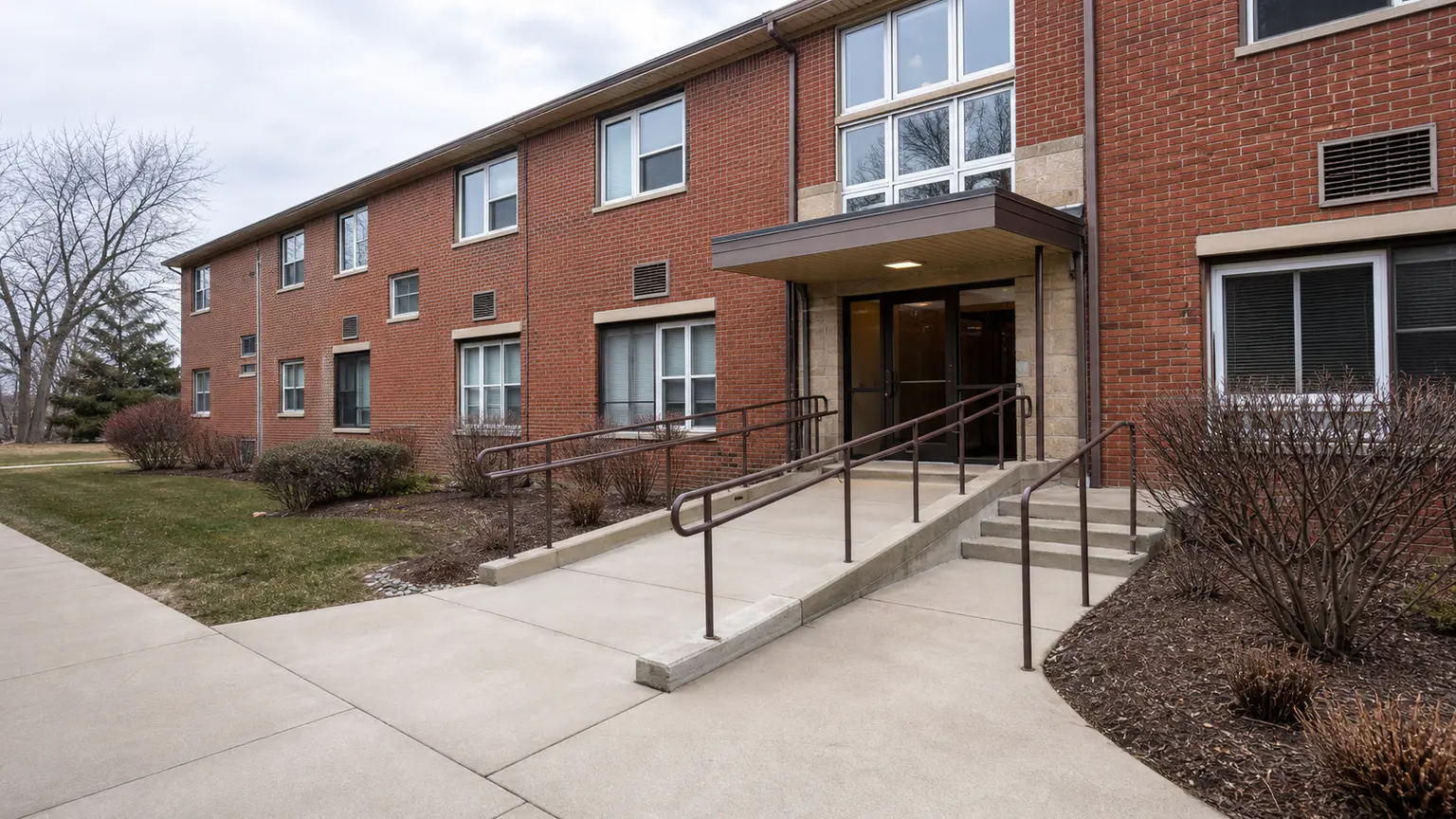
Warmer setpoints make the envelope worth more here
Senior living communities run warmer than apartment buildings, and they run warm around the clock. Residents hold units at temperatures a younger tenant would find uncomfortable, staff do not set back the heat at night, and no unit sits empty during the workday. Every degree of that difference widens the gap between indoor and outdoor temperature, and the cost of a leaky envelope scales with that gap. It also means comfort complaints in a senior building are rarely about the thermostat. A resident who still cannot get warm in a corner unit at 76 degrees has an envelope problem, not a preference. The higher interior temperature also changes where moisture wants to condense inside a wall or roof assembly through a Chicago winter, which affects how insulation can be added and where the air barrier has to sit.
One senior living campus, and often more than one program path
A senior living campus is frequently several buildings and several utility classifications at once. Independent living apartments look and meter like multifamily residential. Licensed assisted living, memory care, and skilled nursing wings often carry a commercial classification instead. Those are different program paths with different measures and different documentation, and a single campus can legitimately sit on both. This is a common reason a facilities director gets a fast no from a contractor who knows one program and stops there. The property-specific review sorts out which buildings and which meters land where, and the program rules in effect at that address determine what is available.
Combustion safety is not a formality in an occupied care setting
Air sealing changes the pressure balance of a building. In an older property with atmospherically vented boilers or water heaters, that can affect how those appliances draft. Safety requirements must be selected for the building systems, approved scope, and applicable program. Where required testing identifies a venting or equipment issue, that work is addressed in the project sequence rather than treated as a surprise at closeout.
Working around care, not through it
Residents cannot be staged out of a memory care unit for a day so a crew can work, and some cannot be moved at all. That constraint shapes everything: which units are worked in what order, how containment and dust control are set up, when noisy work can happen against meal and medication schedules, and how crews are identified and escorted. Attics, roof decks, rim joists, chases, and mechanical rooms usually carry a large share of the available improvement, and most of that work happens outside resident space entirely. Sequencing the out-of-unit work first often delivers most of the result with the least disruption inside.
- Crew identification, escort, and access protocol set with the executive director before the first day
- Containment and dust control planned for occupied corridors
- Daily unit counts kept to what the care schedule can absorb
- Work inside resident rooms coordinated through staff rather than announced to residents
Who signs, and who feels the problem
Senior housing frequently separates ownership from operation. The executive director fields the comfort complaints, the regional facilities director understands the equipment, and a REIT or ownership group approves the capital. Utility program funding changes that conversation, because a project that is substantially covered for qualifying properties is a different approval than an unfunded capital request. The Building Energy Experts written report is built to be forwarded: what is wrong, what it costs to leave alone, what the program path at that address covers, and what remains. Board-ready and asset-manager-ready, not a sales sheet.
Next step
See what may apply to this property
A property-specific review is the only way to know which programs fit your address and your building.