
Who we serve
Energy Upgrades for Condominium Associations and HOAs in Illinois
- Property first
- Human review
- Clear next step
The declaration decides the scope before the building does, even when the cold unit sits on the other side of that line. We separate association-side measures from unit-side measures, write the report for a meeting packet, and sequence against the reserve study.
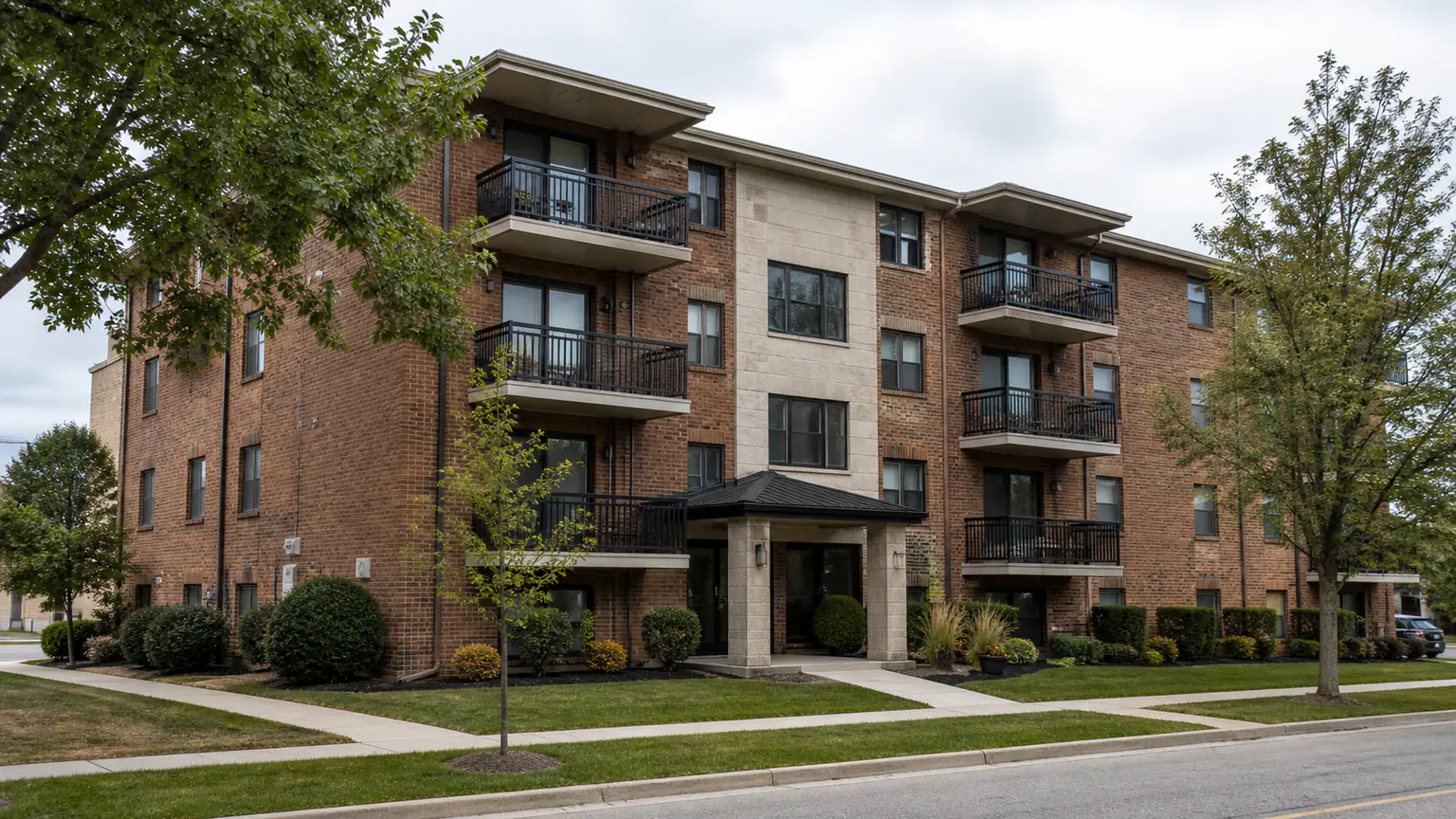
The declaration decides the scope before the building does
On a rental building the owner decides. On a condominium association the declaration decides, and it decides before anyone looks at a roof.
Whether the attic above a top-floor unit is a common element, a limited common element, or part of the unit determines who pays to insulate it, who has to approve the work, and sometimes whether it can be funded as an association project at all. The same question applies to windows, to balconies, to the interior face of an exterior wall, and to the pipe chase behind a unit closet. Two associations across the street from each other can answer it differently.
So we ask for the declaration and the plat before scoping, not after. The report then comes in two parts: measures that sit clearly on the association side, and measures that sit inside units and need individual owner participation. A board can act on the first list without a legal argument, and that is usually where the larger items are anyway, because attics, roofs, corridors, mechanical rooms and the building shell are common elements under most declarations.
A board is not an owner, so the documentation is different
A board has to justify a decision to a membership, often at an open meeting, sometimes against a competing bid, and always against the reserve study. That changes what we deliver.
What a board receives is a written report with the reviewed conditions, prioritized measure list split between association side and unit side, sequencing, applicable program path, and diagnostic results when testing was included. It is written to be attached to a meeting packet and read by someone who was not on the walkthrough.
Boards also turn over. A project scoped in the spring may be voted on by a board with two new faces in the fall. The documentation is meant to survive that handoff.
Reserves, special assessments, and sequencing for a condominium association
Most associations are not choosing between doing the work and doing nothing. They are choosing between the reserve schedule, a special assessment, and waiting another year.
Envelope work has a specific advantage in that conversation, because it usually pairs with something already in the reserve study. If a roof replacement is coming, the ceiling plane below it is accessible at that moment and will not be again for a long time. Air sealing that plane while the roof is open avoids paying for access a second time later. We read the reserve schedule and say plainly which measures should ride along with work the association already plans to fund and which stand on their own. Where a utility program can carry part or all of a measure for qualifying properties, that changes the arithmetic a board is looking at, and the review determines whether it applies.
Access when every unit has a different owner
In a rental building the owner grants access. In a condominium each unit is separately owned, so interior work needs that owner's consent, and some owners will say no. We plan for that instead of hoping otherwise.
Association-side and common-element work is scoped so it can proceed regardless of individual participation. Where unit interiors are in scope, we provide the board with notice and consent language, work by stack or by building so scheduling is predictable, and track participation by unit so the board can see the take rate and follow up. Nothing in the association-side scope is contingent on hitting a participation number.
Building Energy Experts is authorized for the ComEd, Nicor Gas, Peoples Gas and North Shore Gas efficiency programs. Associations with 3 or more units are within our scope. Which program path a specific association fits depends on how the property is metered, which utilities serve the address, whether the association or the individual owners hold the accounts, whether an income-qualified path applies, and current program requirements. Those are property-specific review questions answered for your address, not in general. We prepare and file the program paperwork so the board is not managing it.
Next step
See what may apply to this property
A property-specific review is the only way to know which programs fit your address and your building.