
Who we serve
Multifamily Building Types We Work In
Every property here has 3 or more units, but that is where the similarity ends. The building science, the access plan, and the program path change with the type, and so does the work.
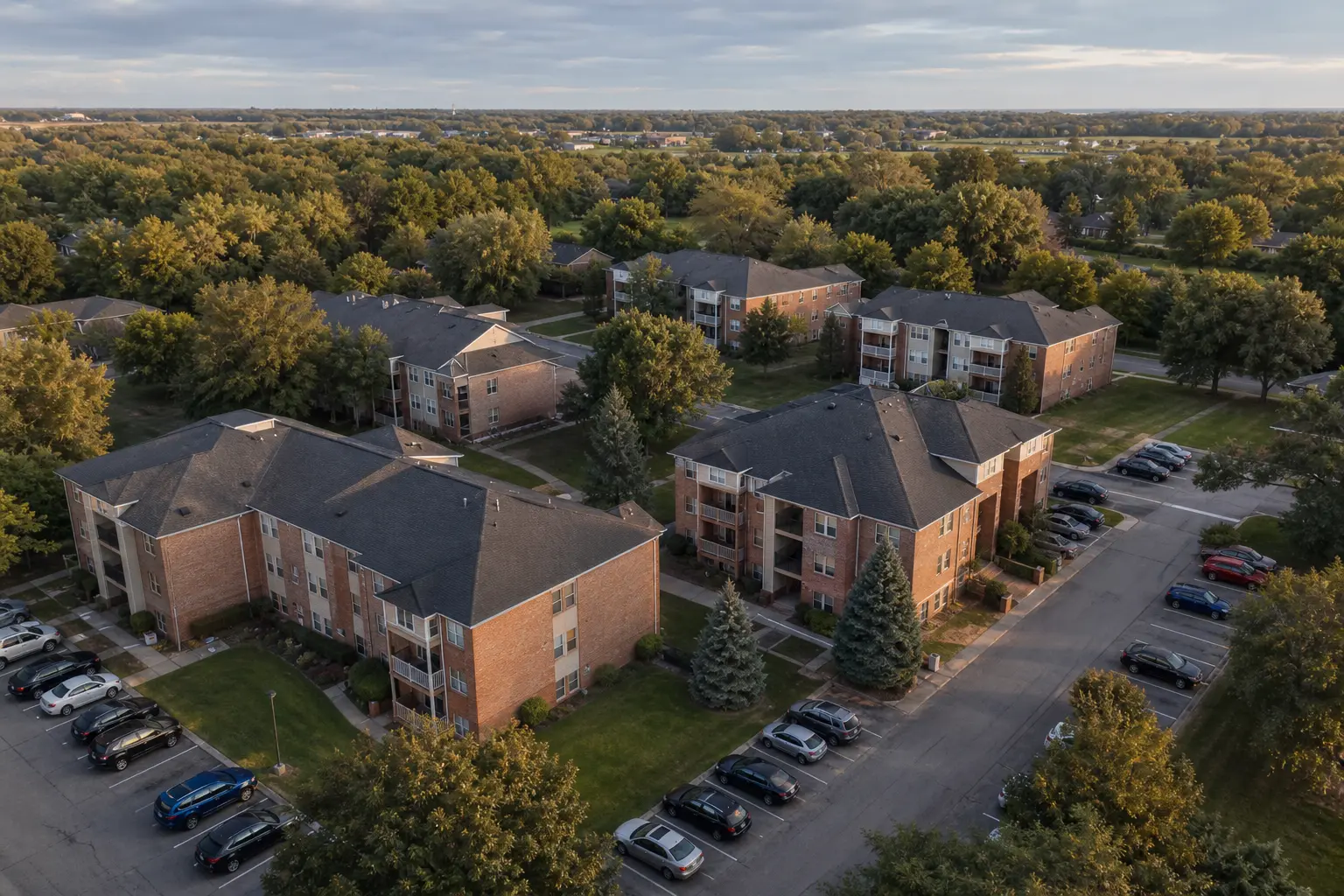
Why the building type changes the work
A three-flat, a 400-unit community, a condominium association, and a residence hall can all need the same measure list on paper. In practice they need different sequencing, different access planning, and often a different funding route. Treating them as one job is how scopes go wrong.
Three things separate them. The first is the physics. A walkup with several entries has an independent stack column behind each stairwell, while a mid-rise has one dominant vertical path through shafts and chases. A townhome association has as many attics as it has units. Those are different pressure stories and they produce different complaint patterns.
The second is who decides. An owner with a checkbook, a volunteer board answering to a membership, a regional asset manager running a capital plan, and a facilities director working around an academic calendar all need the same findings presented in different form, on different timelines.
The third is the funding route. Illinois utility efficiency programs are organized around how space is used and how it is metered. A mixed-use building can sit across more than one path at once. An income-qualified property is established by the building and the address it sits at rather than by the owner’s balance sheet, which is the route behind most of the work delivered at no cost for qualifying properties.
What stays the same
Every property starts with a property-specific review. Diagnostic testing is selected according to the building, approved scope, safety conditions, and applicable program requirements. Air sealing is considered before insulation, and ventilation is planned alongside any tightening work. We file the utility paperwork on every path, and what the programs actually fund is confirmed against your address rather than promised on a web page.
Building types we serve
Garden Apartments and Courtyard Buildings
Two and three story walkups with more than one entry, which means more than one stack and a hot top floor over a cold ground floor. We work the attic or cockloft, the risers, and the rim, and we tell frame and masonry buildings apart before scoping.
Read moreLarge Apartment Complexes and Communities
Several hundred units across multiple buildings, and the same comfort complaint repeating on the same stack. Sampled assessment instead of testing everything, corridor and make-up air balance, shafts and chutes, and a scope phased against your capital plan.
Read moreCondominium Associations and HOAs
The declaration decides the scope before the building does, even when the cold unit sits on the other side of that line. We separate association-side measures from unit-side measures, write the report for a meeting packet, and sequence against the reserve study.
Read moreTownhome and Rowhome Associations
Attached homes are not stacked apartments. There is an attic per unit, a party wall that is often not capped, and end units that run cold. We scope the row, not the building.
Read moreMixed-use Residential over Retail
Apartments over a storefront share a floor and a set of shafts with a business that runs on a different schedule. Cold second floors and cooking odor upstairs are usually the same pressure problem.
Read moreSmall Multifamily, 3 to 9 Units
Three flats, six flats, and small walkups. Three units is our minimum and we will tell you if you are under it. On a building this size we can usually test every unit instead of sampling, so every comfort complaint gets an answer.
Read moreAffordable and Income-Qualified Housing
Buildings where the top floor bakes in August and the ground floor runs space heaters in January. The work happens with residents at home, and what qualifies is the building and the address it sits at, not who owns it.
Read moreSenior Living and Assisted Living Communities
Independent living, assisted living, and memory care. Warmer setpoints and around-the-clock occupancy make a leaky envelope cost more here, and residents cannot simply be staged out while a crew works.
Read moreStudent and Campus Housing
Residence halls, campus apartments, and privately owned student housing. The summer window is short and fixed, and it is the one chance to fix the rooms students complain about all winter.
Read more
Next step
Not sure which one describes your property?
Tell us the address and the unit count. We will tell you which path fits and what the assessment would look at.